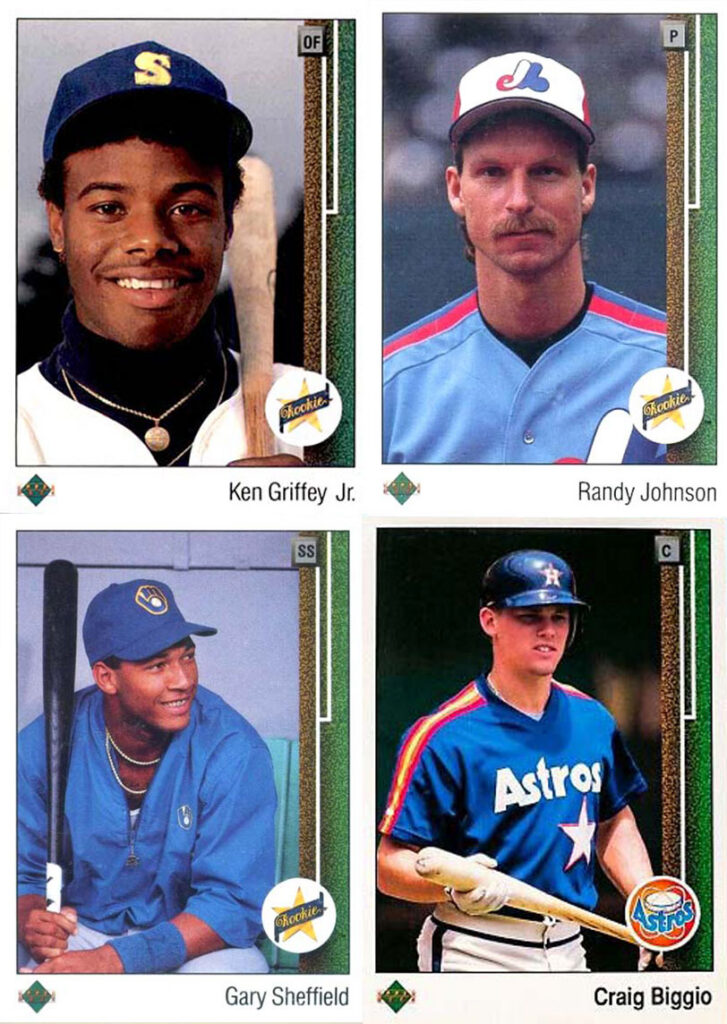
Let’s take a look at which rookie cards are the most valuable in the 1989 Upper Deck.
The 1989 Upper Deck release represents the day the hobby changed forever. Dropping into the market as baseball’s first true “premium” product, Upper Deck stunned collectors with crisp white paper stock, sharp photography on both the front and back, tamper-proof foil packaging, and an innovative anti-counterfeit hologram stamped on every card back.
Because Upper Deck cards were shipped in sturdy boxes and didn’t suffer from the rubber-band or wax-staining issues of older brands, the general condition of these cards tends to be much better. However, the set’s premier “Star Rookie” subset is packed with multiple future Hall of Famers, making the top cards on this checklist highly sought after by modern collectors.
Whether you are hunting through the original 700-card low series or the 100-card high-number extension, here are 6 of the most valuable and legendary rookie cards from the inaugural 1989 Upper Deck set.
1. Ken Griffey Jr. — #1 (Star Rookie)
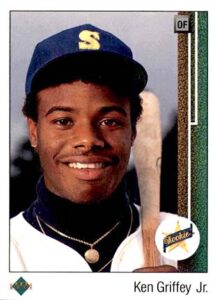
There is no overstating the importance of this card. It isn’t just the crown jewel of the 1989 Upper Deck set; it is arguably the most famous and culturally significant sports card ever printed. Upper Deck took a massive gamble by assigning the very first card in their very first set to a teenager who hadn’t yet played a single major league game. Capturing “The Kid” with his radiant smile and a crisp, airbrushed Seattle Mariners cap, this card single-handedly drove the entire success of the Upper Deck company and remains the definitive centerpiece of any serious 1980s collection.
Some Current Value Estimates For This Card:
-
Graded 10: $5,500
-
Raw/Ungraded: $95
See more prices and data on this 1989 Upper Deck Ken Griffey Jr. #1
2. Randy Johnson — #25 (Star Rookie)
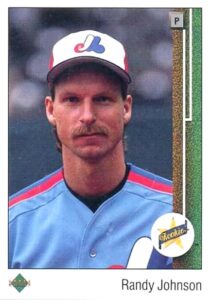
Long before he became “The Big Unit,” intimidating batters with a blistering fastball and winning five Cy Young awards, Randy Johnson was a lanky, mustachioed young southpaw for the Montreal Expos. This card captures him early in his rookie year before he was traded to Seattle. Because it sits in the highly coveted “Star Rookie” subset right alongside Griffey, high-grade copies of Johnson’s rookie are incredibly popular with collectors looking to lock down the era’s elite pitchers.
Some Current Value Estimates For This Card:
-
Graded 10: $230
-
Raw/Ungraded: $3
See more prices and data on this 1989 Upper Deck Randy Johnson #25
3. John Smoltz — #17 (Star Rookie)
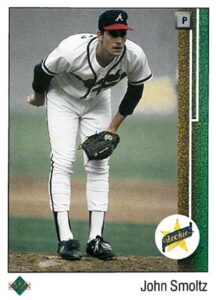
Another legendary Hall of Fame arm tucked into the initial “Star Rookie” run belongs to Atlanta Braves icon John Smoltz. This card captures the young right-hander right as he was breaking into a rotation that he would eventually lead to a 1995 World Series title. Because of Smoltz’s rare achievement of dominating as both a premier starting pitcher and an elite closer later in his career, his rookie card maintains an incredibly strong and steady demand among baseball historians.
Some Current Value Estimates For This Card:
-
Graded 10: $55
-
Raw/Ungraded: $1
See more prices and data on this 1989 Upper Deck John Smoltz #17
4. Craig Biggio — #273 (Base Set)
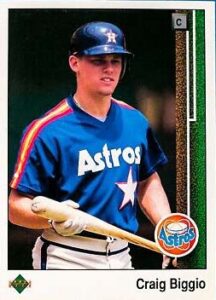
While he wasn’t part of the flashy “Star Rookie” subset at the front of the checklist, Craig Biggio’s card in the standard base set is a massive pull. It features a young Biggio back when he was still a fast, agile catcher for the Houston Astros, long before his transition to second base and his entry into the elite 3,000-hit club. Base set cards like Biggio’s can sometimes suffer from minor corner dings due to the way they were handled in factory sets, making flawless copies highly desirable.
Some Current Value Estimates For This Card:
-
Graded 10: $50
-
Raw/Ungraded: $1
See more prices and data on this 1989 Upper Deck Craig Biggio #273
5. Gary Sheffield — #13 (Star Rookie)
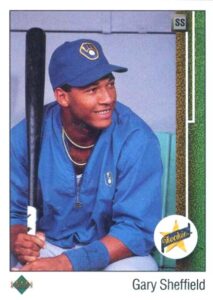
Gary Sheffield’s bat speed was the stuff of legend, and his Upper Deck rookie card captures him as a fresh-faced shortstop for the Milwaukee Brewers. This card is also famous in the hobby for a notable early printing error where the “SS” position abbreviation on the front was accidentally printed upside down. Whether you are hunting for the corrected version or the rarer inverted text variation, Sheffield’s debut card remains a staple of 1989 premium collecting. Price estimates below are for the standard card, not the error.
Some Current Value Estimates For This Card:
-
Graded 10: $40
-
Raw/Ungraded: $2
See more prices and data on this 1989 Upper Deck Gary Sheffield #13
6. Jim Abbott — #755 (High Number Set)
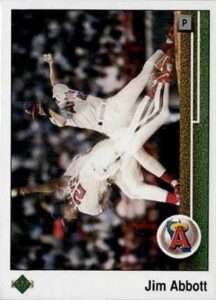
Jim Abbott’s entry into Major League Baseball is one of the most inspiring stories in sports history, making the big leagues as a pitcher despite being born without a right hand. Because he made his debut straight out of college without playing a single game in the minor leagues, he was included in Upper Deck’s “High Number” extended set later in the year. His card remains a poignant fan favorite and a historically significant piece of any 1989 collection.
Some Current Value Estimates For This Card:
-
Graded 10: $62
-
Raw/Ungraded: $1
See more prices and data on this 1989 Upper Deck Jim Abbott #755
The Hologram Factor: When examining your 1989 Upper Deck rookies, take a close look at the back. The distinct diamond-shaped hologram was Upper Deck’s signature security feature. Sometimes, factory errors caused the hologram to be missing completely, misaligned, or even stamped twice. While standard copies are highly prized for their clean white edges, these rare hologram variations add a fun, extra layer of treasure hunting for specialized collectors!
DISCLAIMER: This data is not intended as financial advice and should not be used as such. Please do your own research before making any investment or selling/buying decisions.
Pricing Data Updated: Data Updated: June 2026